
In July 1920, as the Red Army had the Polish forces in a full-scale retreat, the British Foreign Secretary, Lord Curzon, sent a note to Moscow proposing a new border between the newly independent Polish state and the lands of the former Russian Empire that were under Bolshevik control. The proposed border, known as the Curzon Line, followed an ethnographic boundary that would have stripped Poland of its eastern “Kresy”, effectively ceding the historic centers of Vilnius, Grodno, and Lviv to Moscow’s control.
Issued just two months after Józef Piłsudski’s triumphant march into Kiev, the proposal was a stunning reversal. It would have formally handed the Bolsheviks vast territories that the Russian Empire had held since the late 18th century, lands the Bolsheviks had surrendered to Germany at Brest-Litovsk, but were now recapturing by force.
Curzon issued his note as the Red Army’s pincer closed in from two directions: Semyon Budyonny’s Konarmiya (1st Cavalry Army) tore through the southeast in what is now Ukraine, while Mikhail Tukhachevsky’s forces surged through the northeast via modern-day Belarus. The momentum was so overwhelming that Lenin set his sights on Warsaw, brushing aside the caution of leaders like Trotsky and Stalin. When Curzon’s proposal arrived, Lenin took it for British trickery, assuming that the British were using the peace proposal as a ruse to annex the Crimea.
He thus ordered a “frenzied acceleration” of the march on Warsaw. The Bolshevik leadership had determined that they must liquidate the Polish front as a strategic prerequisite, allowing them to consolidate their overstretched resources and pivot the full weight of the Red Army south. In Lenin’s view, every day spent bogged down on the Vistula was a day the British could use to fortify the Crimean Peninsula and turn General Wrangel’s White Army into an impregnable base for foreign intervention. While it is common to view Lenin’s orders as a crusade to export the revolution to Berlin, internal Bolshevik documents reveal a more urgent, practical necessity: the need to secure the rear in the Crimea, over 1,500 kilometers away.
By the time the Red Army reached the gates of Warsaw, it was a victim of its own success, exhausted and dangerously overextended after a breakneck advance. This vulnerability allowed Piłsudski to execute a daring counteroffensive, the “Miracle on the Vistula,” which shattered the Red Army’s lines and sent them into a full-scale retreat. The resulting Treaty of Riga in 1921 ignored Curzon’s map entirely, ceding the very territories he had offered Moscow back to Poland. Rather than a lasting peace, the settlement turned the borderlands into a geopolitical fault line, fueling nearly two decades of subversion and tension that would ultimately culminate in war in 1939.
As far-fetched as it may seem, it was Lenin’s preoccupation with the strategic Crimea peninsula that inadvertently set the stage for the Red Army’s defeat. By forcing a “frenzied acceleration” to close the Polish front, he overstretched his supply lines beyond their breaking point, creating the very opening Piłsudski needed for the “Miracle on the Vistula” to succeed.
Crimea: A Strategic Problem
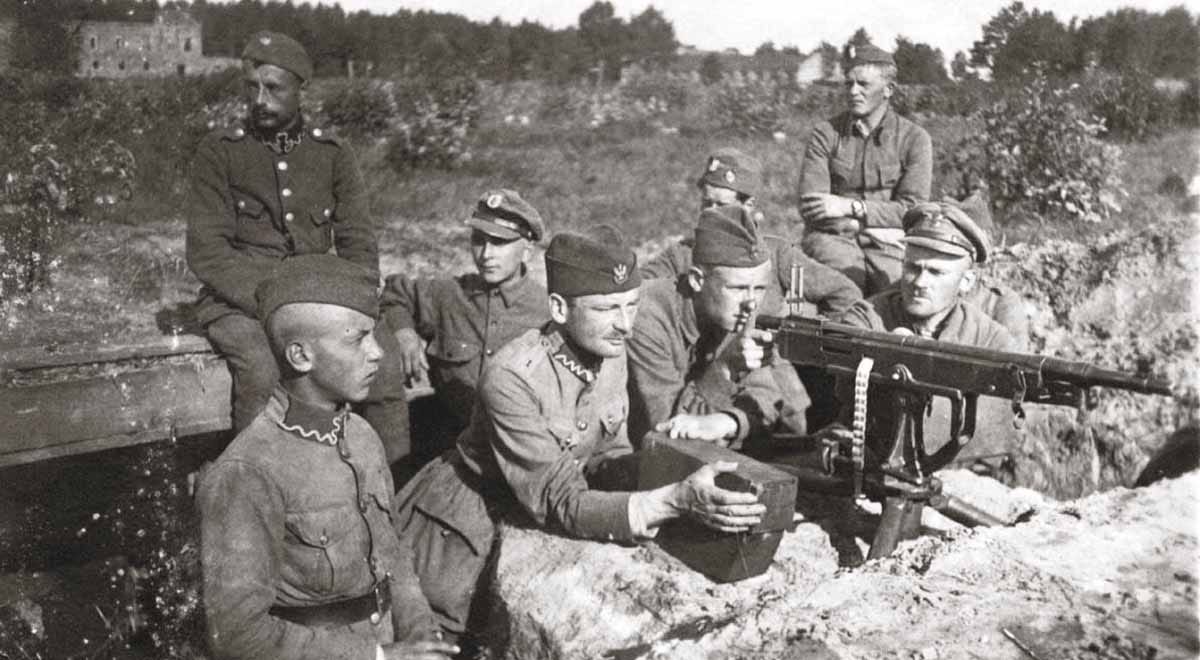
By early 1920, the tide of the Russian Civil War had shifted decisively, with the Reds advancing on all fronts. From his fortified base at Sevastopol, General Pyotr Wrangel commanded the remnants of the anti-Bolshevik armies that had been driven south after the collapse of earlier White offensives. Unlike his predecessor Anton Denikin, whose reckless march on Moscow had ended in disaster in 1919, Wrangel adopted a more cautious strategy. After assuming command of the White forces in April 1920, he reorganized what remained of the Volunteer Army into the so-called Russian Army and focused on consolidating Crimea as a defensible base.
Protected by the narrow Perekop Isthmus and supported by the Black Sea Fleet, the peninsula offered the Whites a rare strategic advantage in a civil war otherwise turning decisively against them. Crucially, in addition to digging his troops in, Wrangel was actively courting British and French recognition as a sovereign “South Russian” state, a move that, if successful, would have permanently severed the Black Sea coast from Bolshevik control.1
Even more troubling for the Bolshevik leadership was the possibility of foreign intervention. British warships remained active in the Black Sea, and although London had formally withdrawn large-scale support for the Whites, the Kremlin feared that Crimea could serve as a staging ground for renewed Allied involvement in the Russian Civil War. If the peninsula were reinforced or supplied from abroad, Wrangel’s army might yet prolong the conflict or reopen the southern front entirely.
By April 1920, the Red victory in the South appeared imminent. Following the defeat of the White forces on the Taman Peninsula, Commander-in-Chief Sergei Kamenev issued a decisive directive to “develop active operations from the Taman Peninsula toward the Crimean Peninsula.”2 The final liquidation of the counter-revolution seemed to be a matter of weeks.
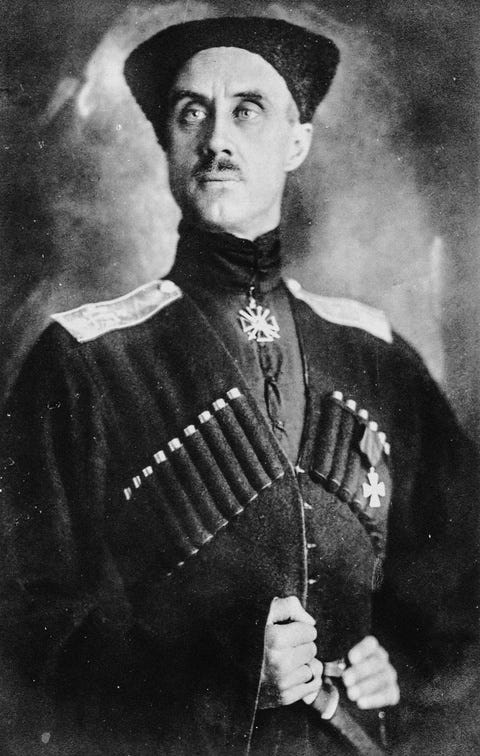
However, this military momentum was abruptly checked by a diplomatic intervention from London. Lord Curzon issued a radiogram to Moscow on May 8th, appealing for a formal amnesty for the remnants of the White Army. Recognizing the risk of a direct clash with the British navy, Lenin ordered a cessation of active operations to engage in “negotiations on the conditions for clearing Crimea, on the principle (no more than this) of a general amnesty for the Whites.”3
For the Red Army high command, however, this was a matter of total surrender. Kamenev remained focused on the material prize, insisting that any deal must include the “unconditional transfer of the entire territory of Crimea, the entire fleet—both military and merchant—as well as all weapons, equipment, and military supplies.”4
The Polish Invasion
Beginning in early 1919, the makeshift Polish legions under Piłsudski’s command expanded eastward, carving out a new frontier across modern Ukraine, Belarus, and Lithuania. Later that year, Piłsudski offered to lead the Polish army to Moscow and topple the Bolsheviks in exchange for a hefty financial subsidy from the Entente. London, however, remained wedded to General Denikin’s White movement and refused to back a Polish-led conquest. The French were equally noncommittal; while they spoke grandly of Poland serving as an “eastern bulwark” against Bolshevism, they were unwilling to provide the hard currency or material support required to turn Piłsudski’s offer into a reality.5
Piłsudski’s ultimate objective was a restoration of Poland’s pre-1772 borders in the form of a “federation” with Byelorussia, Lithuania, and smaller independent Ukraine. In April 1920 the deposed Ukrainian nationalist leader Symon Petliura, who was head of the short-lived Ukrainian People’s Republic and whose forces had retreated to Warsaw the previous December, signed a military alliance with Piłsudski, known as the Treaty of Warsaw.
Petliura agreed to relinquish claims to Galicia in return for Polish assistance in fighting the Bolsheviks to drive the Red Army from Kiev and establish an independent Ukraine. Despite facing strong opposition from Polish nationalists who insisted that an independent Ukraine could not exist, Piłsudski proclaimed “there can be no independent Poland without an independent Ukraine.”6 Beyond the Ukrainian question, the campaign aimed to solidify Warsaw’s control over the contested territories of the east, including Vilno.
On April 28, Piłsudski issued a formal proclamation to the inhabitants of Ukraine, attempting to clarify the strategic intent of the Polish advance. “The army of the Polish Republic has moved forward and penetrated deep into Ukraine,” he declared. “I inform the population of these regions that the Polish army... will remain in Ukraine only for the time necessary for these regions to be taken over by the administration of a regular Ukrainian Government.”7
For Piłsudski, this was the operational realization of his federation plan: the use of Polish forces to create a sovereign space for Petliura’s Ukrainian People’s Republic. He framed the invasion as a stabilizing mission against the Bolsheviks. “To all the inhabitants of Ukraine, without distinction of class, origin, or religion, the army of the Polish Republic guarantees protection and patronage,” he continued. This was a direct challenge to the Bolshevik class-war narrative, aiming to peel away the Ukrainian peasantry from Moscow.
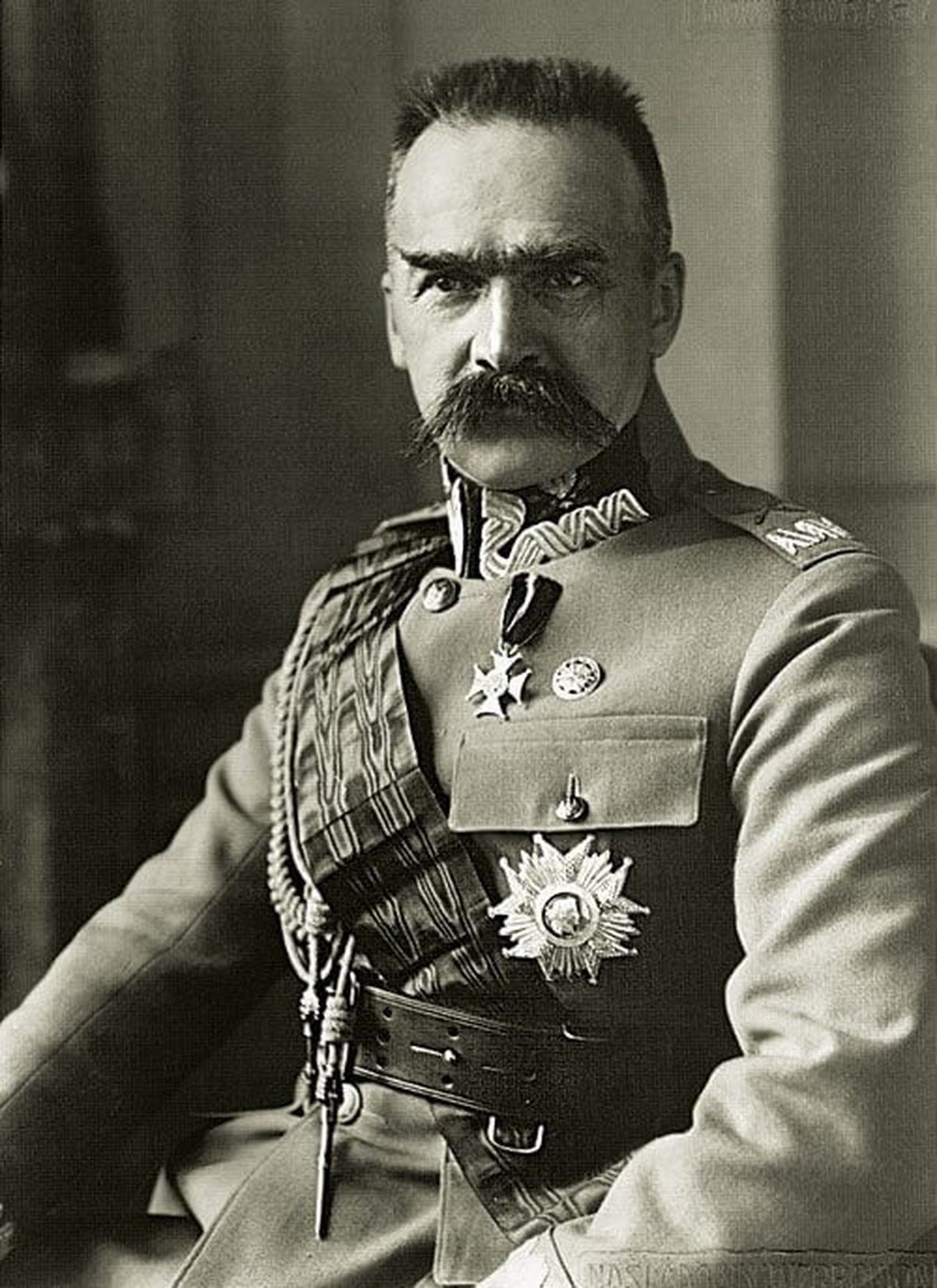
Meanwhile, Lenin had issued a peace offering to Piłsudski, offering to cede nearly all of Byelorussia and much of Ukraine. It was a calculated move designed to make any further Polish advance look like naked aggression to the international community. Whether sensing a bluff or committed to the total realization of his “Intermarium” federation plan, Piłsudski turned down the offer and sent 50,000 troops surging into Ukraine.8
The speed of the Polish advance was staggering. Within days, the Polish-Ukrainian forces had shattered the Red Army’s overstretched lines in the south. On May 7, 1920, the Polish cavalry entered Kiev, capturing the historic capital with almost no resistance. To the Bolshevik leadership in Moscow, the loss of Kiev stood as a catastrophic failure of their southern strategy.
The Bolsheviks amplified the class-based and world imperialist motives for the Polish invasion. “Listen, workers, listen, peasants, listen Red Army soldiers,” Trotsky proclaimed. “The Polish szlachta [gentry] and bourgeoisie have attacked us in a war… Death to the Polish bourgeoisie. On its corpse we have concluded an alliance with worker-peasant Poland.”9
The Western powers met the invasion with a stance more akin to private annoyance than public condemnation. While the diplomats in Paris and London spoke of de-escalation, the administrative machinery of the Entente told a different story. In a striking display of strategic incoherence—or calculated duplicity, as Moscow saw it—the British War Office continued to fulfill a contract, signed the previous year, to supply Piłsudski with the very weapons and artillery required for the offensive.10
The Red Army Counterattacks
Piłsudski’s dash to Kiev had achieved its symbolic goal, but it left the Polish forces dangerously overextended along a massive, porous front. To exploit this vulnerability, Moscow turned to its most potent mobile asset: Semyon Budyonny’s 1st Cavalry Army (Konarmiya). Originally forged as a brutal counter to the Whites’ Cossack cavalry, the Konarmiya had just completed the liquidation of Denikin’s forces at Novorossiysk in February.
In April, Budyonny received orders to pivot his entire force north to retake Kiev and drive the Poles back across the border. The scale of this redeployment was immense; in May, a Polish reconnaissance aircraft spotted a massive, miles-long dust storm on the horizon.11 On June 5, Budyonny’s cavalry broke through the Polish lines, forcing a rapid evacuation of Kiev.
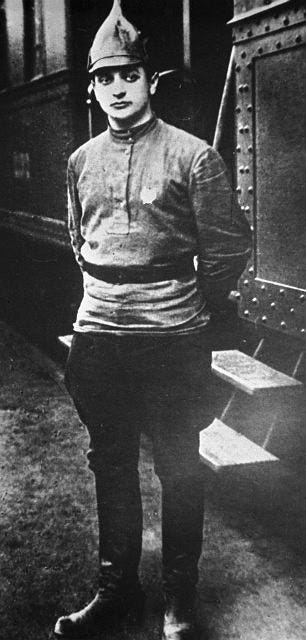
Meanwhile, further north in Smolensk, the 27-year-old Mikhail Tukhachevsky was placed in command of the Western Front. A former Imperial officer turned Bolshevik radical, Tukhachevsky began amassing a massive force for a westward drive. On July 2, he issued a directive that transformed the campaign into a global crusade. “Soldiers of the workers’ revolution!” Tukhachevsky wrote. “The time for payback has arrived... In the West will be decided the fate of the world revolution. Across the corpse of White Poland lies the way to world conflagration. On our bayonets, we will carry happiness and peace to laboring humankind… To Vilna, Minsk, and Warsaw—march!”12
None other than Josef Stalin, meanwhile, took a degree of skepticism toward the prospect of taking Warsaw. “Some of them are not satisfied with the successes on the Front and shout, ‘March on Warsaw,’” Stalin said while in Kharkov. “Others are not satisfied with the defense of our republic against enemy attack, and proudly proclaim that they can make peace only with ‘a red Soviet Warsaw’.”13
The situation near Crimea, meanwhile, had reached a tense equilibrium. That spring, British diplomacy briefly intervened to shield Wrangel’s Crimean regime from destruction. Foreign Secretary Lord Curzon sent a radiogram to Moscow urging negotiations and amnesty for the remnants of the White. In a report filed discussing Curzon’s proposal, Kamenev explained, “From the military point of view it appears highly desirable to bring the struggle on the Crimean Peninsula to an end as soon as possible or, at the very least, to create such conditions there as would guarantee that our operations on the Polish front will not be complicated by an aggravation of the situation in Crimea and in southern Ukraine.”14
Lenin agreed, writing to Trotsky that Moscow should agree “to negotiations on the conditions for clearing Crimea, on the principle (no more than this) of a general amnesty for the Whites.”15 Piłsudski’s invasion of present-day Ukraine, therefore, coincided with the Red Army’s brief suspension of its offensive against Crimea while Moscow explored British proposals for negotiations and amnesty for Wrangel’s forces. Although no formal ceasefire was concluded, the pause convinced the Bolshevik leadership that London might still intervene to preserve the Crimean enclave.
The suspension of the Crimean operation allowed the Red Army to focus its efforts on Budyonny’s sweep from the southeast and Tukhachevsky’s drive from the northeast. On June 2, Lenin cabled Stalin explaining the situation: “Trotsky is occupied with sending you reinforcements from the Crimean divisions… Try to pull your units together and, at all costs, continue the offensive you have begun with greater energy. You, of course, remember that, by decision of the Politburo, the offensive against Crimea has been suspended until a new decision of the Politburo.”16
This reallocation of the “Crimean divisions” turned the Polish-Soviet War into an all-or-nothing gamble. By stripping the southern front to feed the western drive, Lenin was effectively betting the survival of the revolution on a lightning victory in Poland. Not all in Lenin’s circle were convinced of the necessity of taking Warsaw. Trotsky, Stalin, Dzierzynski, and Radek all argued that an offensive on Warsaw was doomed to fail if the Polish working classes did not rise up in rebellion. Indeed, Stalin publicized his skepticism in a Pravda article in July, writing “it is laughable to talk about a ‘march on Warsaw’ and more broadly about the solidity of our successes while the Wrangel danger is not liquidated.”17
Curzon’s Proposal
The very day that Stalin published his public warning, July 11, Minsk fell to Tukhachevsky’s forces. Sensing an imminent fall of the Polish capital, Piłsudski again appealed to the allies. The French, though frustrated with Piłsudski’s ill-advised gambit that spring, nonetheless suggested an anti-Bolshevik operation.
The British, instead, proposed a temporary border that followed the approximate ethnic limits of Polish settlement. “A truce should be concluded between Poland and Soviet Russia, under which military operations will immediately cease,” Curzon wrote to Moscow. “The terms of the truce should include, on one hand, the withdrawal of the Polish army to the line established last year by the Peace Conference as the eastern boundary of the territory within which Poland is entitled to introduce its own administration.”18 Curzon then proposed that a conference be held in London to negotiate a permanent border.
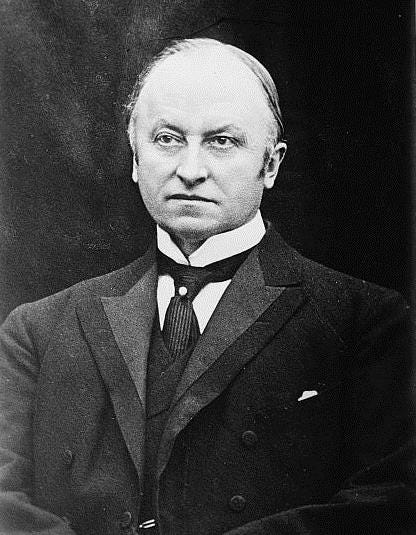
Shortly after receiving the note, Lenin cabled Stalin, claiming that the proposal “is sheer swindling for the sake of the annexation of Crimea, which is brazenly put forward in the note. They want to snatch victory out of our hands by means of fraudulent promises.”19 At the same time, Lenin wrote to Sklyansky, ordering “The international situation — especially Curzon’s proposal (the annexation of Crimea in exchange for an armistice with Poland, the Grodno–Białystok line) — demands a furious acceleration of the offensive against Poland.”20
Lenin’s order for a “furious acceleration” demanded a tempo that Tukhachevsky’s and Budyonny’s forces were already struggling to sustain. By mid-July, the Red Army was advancing at a rate of nearly 20 miles a day, a blistering pace for infantry and horse-drawn supply wagons. Rather than increasing the actual speed of the march, the order served to strip away any remaining operational caution. Logistics were sacrificed for momentum, and every mile gained toward Warsaw pushed the combat units further from their railheads and bread supplies.
Kamenev himself warned of the dangers of such an overextension: “Lacking reserves, our enemies would need only a limited concentration of fresh forces to deliver a decisive blow at one point, shaking the entire front—just as we did during the struggle against Denikin, when his front, extended toward Orel, became overstretched. At that time, 2.5 of our fresh divisions were enough to break his line, beginning his final defeat. The Poles experienced the same overextension problem in their advance into Ukraine, which they are now paying for with general defeat along their front.”21
Nevertheless, the rapid advance continued. Isaac Babel, who would later gain fame as a journalist and playwright, was attached to Budyonny’s First Cavalry and kept a diary during the summer of 1920. In his diary he described Red cavalry sweeping across the countryside “like a whirlwind, like lava, hated by everyone.” He would also comment “What a necessary thing rest is. The cavalry and the horses are recovering from this inhuman labor.”22
On July 22, Kamenev arrived in Minsk and ordered Tukhachevsky to take Warsaw no later than August 12. Instead of accepting Curzon’s proposed peace terms and retaining present-day Ukraine, most of Belarus, and Lithuania, Lenin, who never lowered his sights from the ultimate goal of igniting revolution in Europe, doubled down and ordered the Red Army, exhausted and overstretched, to take Warsaw.
Miracle on the Vistula
By mid-August, the “furious acceleration” had achieved its geographical objective, but at the cost of total operational exhaustion. Tukhachevsky’s forces were at the gates of Warsaw, yet they were effectively a ghost army. The “inhuman labor” Babel noted had reached its breaking point; the horses were spent, the supply wagons were hundreds of miles behind the railheads, and the soldiers were subsisting on revolutionary fervor rather than bread.
Despite being ordered by Kamenev to redirect southwestern front units from Lviv toward Lublin, Stalin took it upon himself to disregard Kamenev’s directive and continue the offensive on the Galician capital. Trotsky later speculated that Stalin “was waging his own war” and wanted to take Lviv because Tukhachevsky was poised to capture Warsaw.23 Whether or not Stalin’s decision to remain in Lviv was an intentional disregard for Kamenev’s orders or if altering their battle plans was “already impossible” is lost to history. On August 14th, Stalin was summoned to Moscow to clear up the dispute, and the following week, Budyonny abandoned the siege of Lviv.
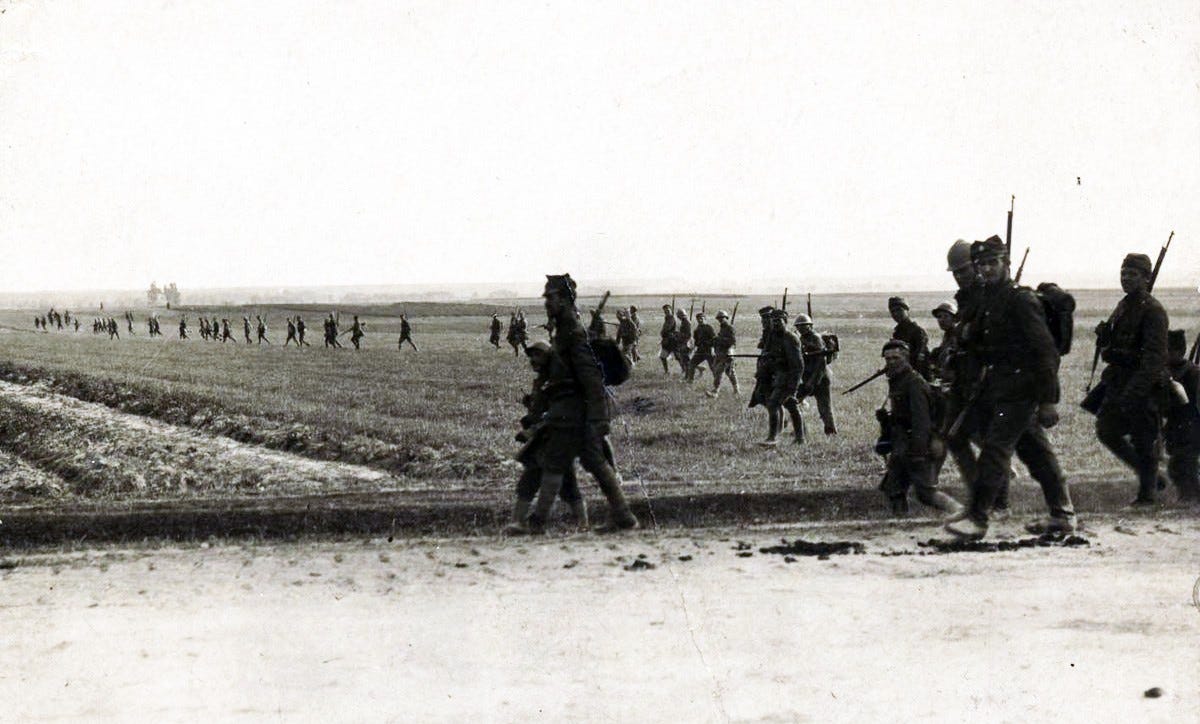
By then, the damage had been done. Budyonny’s cavalry was tied up in Galicia and Tukhachevsky’s forces raced to the gates of Warsaw. Piłsudski didn’t need a miracle; he just needed to find the seam. On August 16, he struck from the Wieprz River, driving a wedge directly into a 150 km gap in Tukhachevsky’s overextended flank. Five divisions drove 60 miles through the gap in the first 24 hours. The Red Army, exhausted by weeks of relentless marching and stripped of its reserves to fuel the advance, collapsed under the pressure. Three of Tukhachevsky’s five armies were lost, and on September 1st, the Politburo accepted Stalin’s resignation from his military posts. The “furious acceleration” had finally hit its limit, sending the Bolshevik forces retreating back across Curzon’s proposed border and beyond.
Treaty of Riga
On August 19th, three days after Piłsudski’s counterattack, Kamenev issued a report explaining that the Red Army was “scarcely in a position to deal with Wrangel in Crimea,” and therefore called for “vigorous assistance by diplomacy toward the speedy ending of the war with Poland”.24 Moscow obliged, and Lenin acknowledged that defeat, in part, lay in the failure of the Polish workers to rise in support of the Red Army. “Poland was not ready for a social revolution,” Lenin stated in September.25 The defeat thus made the Bolsheviks realize that European revolution was not imminent, at least for the time being.
Talks between the Bolsheviks and the Polish government commenced in September in the city of Riga, the capital of the newly independent Latvian state. An armistice was signed on October 12th, allowing the Red Army to focus its efforts on Wrangel in the Crimea. With a concentrated attack, the results were not long. On November Mikhail Frunze cabled Lenin announcing the victory: “Today our units entered Sevastopol. With the powerful blows of the Red regiments, the South Russian counterrevolution has been finally crushed. For our exhausted country, the opportunity is now opening to begin healing the wounds inflicted by the imperialist and civil wars.”26
Negotiations in Riga, however, would take far longer. It was not until March of 1921 that what came to be known as the Treaty of Riga was signed, an agreement that ceded anywhere where 150–250 km of territory east of what the Curzon line would have granted Soviet Russia, including the cities of Vilna, Grodno, and Lviv. The new Polish state encompassed more than 100,000 square kilometers of territory east of the Curzon line that contained anywhere from 10-12 million Byelorussians, Ukrainians, and Jews.
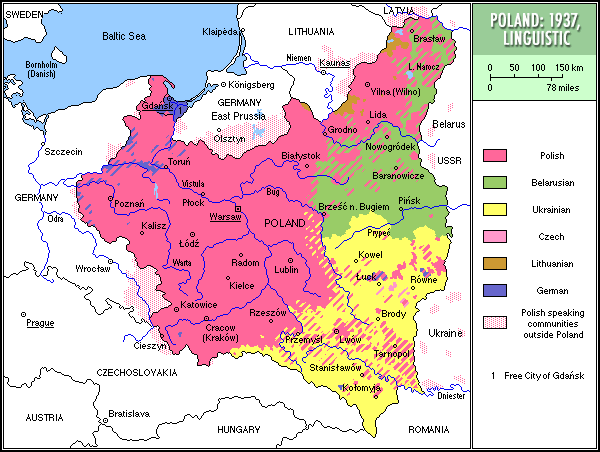
Though the new border would bring a nominal peace between the two states, it established a geopolitical fault line defined by deep-seated distrust and subversion that would dictate Soviet policy for two decades, ultimately culminating in the 1939 invasion to reclaim the territories lost during the frenzied gamble of 1920.
But that, as they say, is a story for another day.
Stephen Kotkin, Stalin, Volume I: Paradoxes of Power, 1878–1928 (New York: Penguin Press, 2014), Kindle edition, loc. 8560.
Директива Главного командования о развитии действий на Крым. 10 апреля 1920 г. ЦГАСА, ф. 6, оп. 4, д. 302, л. 62. Подлинник.
Из протокола № 4 заседания Политбюро ЦК РКП(б) о мероприятиях по укреплению Юго-Западного фронта и положении на Украине. 26 апреля 1920 г. Из истории гражданской войны в СССР. М., изд-во Советская Россия, 1961, т. 3. стр. 280
Ibid.
Kotkin, 8413.
Reshetar, The Ukrainian Revolution, 301–2; Wandycz, Soviet-Polish Relations, 191–2; Palij, The Ukrainian-Polish Defensive Alliance, in Kotkin 8443.
Прокламация Верховного вождя польской армии И. Пилсудского «Ко всем жителям Украины». Варшава, 28/IV 1920 г. «Красная книга»: Сборник дипломатических документов о русско-польских отношениях с 1918 г. по 1920 г. — М.: Гос. изд-во, 1920.
Kotkin, 8444.
Trotskii, “Smert’ pol’skoi burzhuazii” [April 29, 1920], in Kak vooruzhalas’ revoliutsiia, II: 91. In Kotkin, 8444.
Kotkin, 8475.
Davies, White Eagle, Red Star, 120, in Kotkin, 8475.
Reproduced in the appendices to Skvortsov-Stepanov, S Krasnoi Armiei, 78, in Kotkin, 8536.
Sochineniia, IV: 336–41; Mikhutina, Pol’sko-Sovetskaia voina, 182–3. In Kotkin.
Доклад Главного командования председателю Реввоенсовета республики по поводу радиограммы министра иностранных дел Великобритании. 5 мая 1920 г. ЦГАСА, ф. 6, оп. 4, д. 1092, л. 8. Копия.
Из протокола № 4 заседания Политбюро ЦК РКП(б) о мероприятиях по укреплению Юго-Западного фронта и положении на Украине. 26 апреля 1920 г. Из истории гражданской войны в СССР. М., изд-во Советская Россия, 1961, т. 3. стр. 280.
Телеграмма В. И. Ленина И. В. Сталину. 2 июня 1920 г. Ленин В.И. Полное собрание сочинений, т. 61, стр. 205.
Pravda, July 11, 1920; Sochineniia, IV: 324, 333, 336–41.
«Линия Керзона». (Вопрос о восточных границах Польши). Радиотелеграмма британского министра иностранных дел Народному Комиссару по иностранным делам РСФСР. 12 июля 1920 г.
Телефонограмма В. И. Ленина И. В. Сталину. 12 или 13 июля 1920 г. Ленин В.И. Полное собрание сочинений, т. 51, стр. 237-238.
Записка В. И. Ленина Э. М. Склянскому. 12 или 13 июля 1920 г. Ленин В.И. Полное собрание сочинений, т. 51, стр. 238.
Доклад Главного командования председателю Реввоенсовета республики о стратегических планах в связи с нотой Керзона. 15 июля 1920 г. ЦГАСА, ф. 33988, оп. 2, д. 176, лл. 77-78. Подлинник.
Исаак Бабель. Конармейский дневник 1920 года.
Kotkin, 8633.
Доклад Главного командования председателю Реввоенсовета республики о положении и планах борьбы на Польском и Врангелевском фронтах. 19 августа 1920 г. ЦГАСА, ф. 33988, оп. 2, д. 201, лл. 341-343. Заверенная копия.
Orlando Figes, A People’s Tragedy: The Russian Revolution, 1891–1924 (New York: Penguin Books, 1998), 703.
Телеграмма М. В. Фрунзе В. И. Ленину, ЦК РКП(б), ЦК КП(б) Украины и Совнаркому Украины о завершении разгрома Врангеля. Мелитополь, 15 ноября 1920 г. Из истории гражданской войны в СССР. М., изд-во Советская Россия, 1961, т. 3. стр. 436
A great story! In a way, it shows how the world has been always working. An all-powerful leader whose decisions are never challenged (Lenin), a western politician giving away land that he does not own (Curzon), a visionary who depends on external resources that are owned by people who don’t care (Pilsudski and his western allies).
Pilsudski saw Russian state as it was. A mortal threat to the rest of the world, and to Poland in particular. He understood Poland cannot rely on the west and has to have local allies. Hence his vision of independent Belorussia and Ukraine as a buffer against Russia.
Fast forward - a hundred years later… Russian Army “brings peace, prosperity, and happiness” on Shahed drones to Ukraine (same as Tuchachevsky’s army on their bayonets into Poland), Ukraine is the only thing that stands between Russia and NATO (and it is in strategic interest of Poland to help Ukraine), the highest GDP investment in defense are by countries having a border with Russia (hence Pisudski’s buffer zone could have worked), Trump is giving eastern Ukraine to Putin (like Curzon did in Poland’s case).
I read somewhere that, when Hitler took power, Pilsudski saw him through and proposed a premptive war against Germany to remove Adolf from power. He was criticized by the France and Great Britain as a “warmonger”.
Living in a comfortable illusion is a dangerous thing.
Thanks for covering this immensely fascinating conflict, and the Crimea angle is definitely one which I appreciate. What's interesting is that even after Pilsudski had repelled the Soviets at Warsaw and retaken large parts of Western Ukraine and Belarus, domestic pressure from Roman Dmowski's "National Democracy" movement severely limited Pilsudski's ability to salvage the Intermarium ideal, since these factions in the government and military sought to create an ethnically and linguistically homogenous Polish state. During peace talks with the Soviets at Riga, Poland blatantly refused to annex the Belarusian capital of Minsk even after the Soviets had offered to hand it over, and the armed Polish annexation of Wilno in 1920 alienated the Lithuanians to Poland's Intermarium mission because they saw the act as a betrayal of the bilateral framework that would have theoretically defined Pilsudski's federation. While the Polish retreat from Kyiv may have dealt the Intermarium ideal a serious blow, so too did the anti-federal statesmen who had permeated Poland's government by the time the war was drawing to a close. I know these topics are explored further in Timothy Snyder's book "The Reconstruction of Nations," and thanks again for this great piece.